What started as a box of old fishing lures at an auction turned into a full-blown adventure, the kind where you don’t realize you’ve taken the bait until you’re already reeled in.
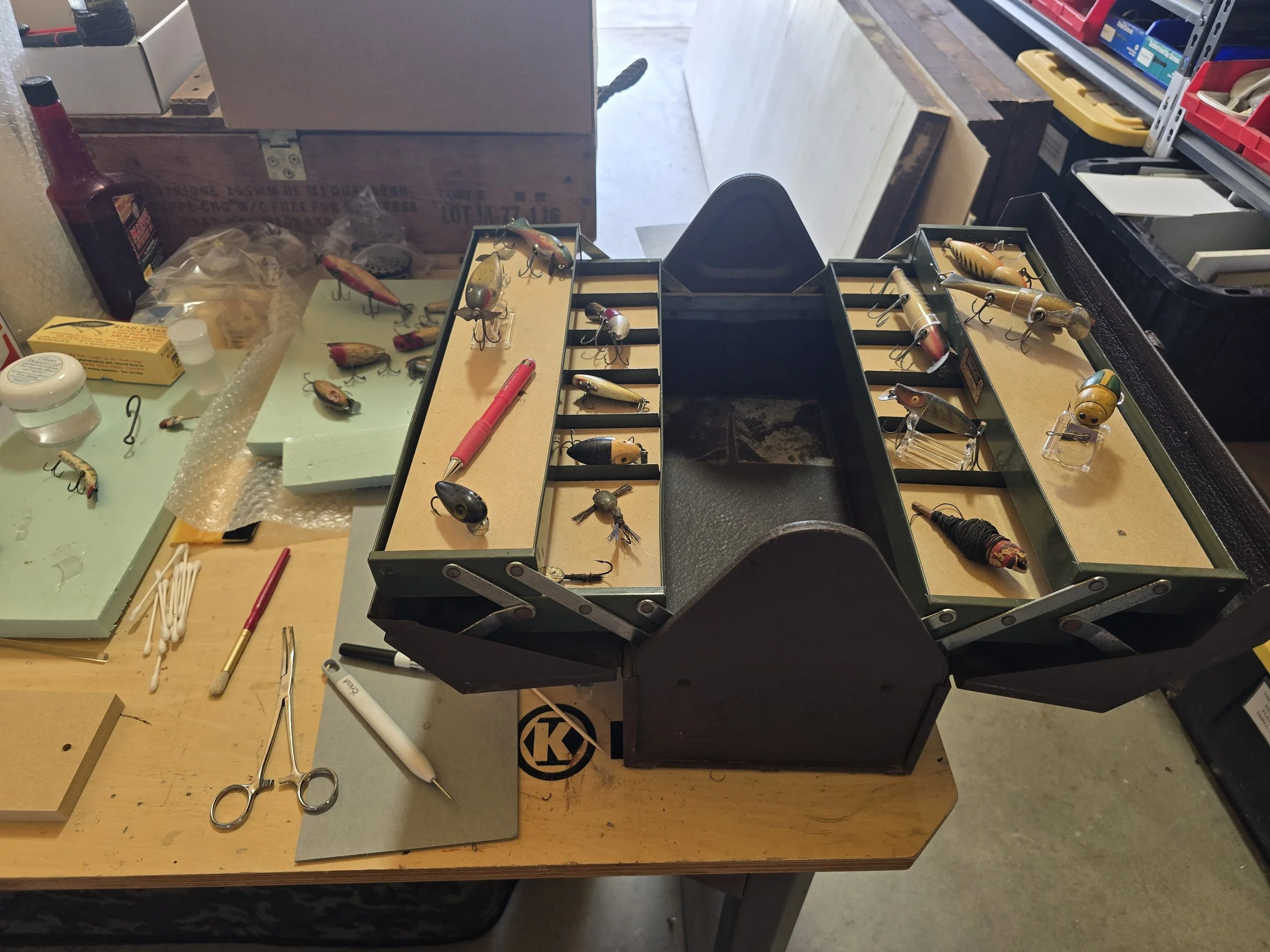
At first glance, it looked more like a tetanus shot waiting to happen that an exhibit possibility. Rusty hooks. Tarnished reels. Dry-rotten fishing line that probably hadn’t seen water since Eisenhower was in office. But somewhere in the back of my mind, a little voice cast a line: There’s a story here.
And that’s the thing about fishing — and history, for that matter. Sometimes the best catches are the ones hiding beneath the surface.
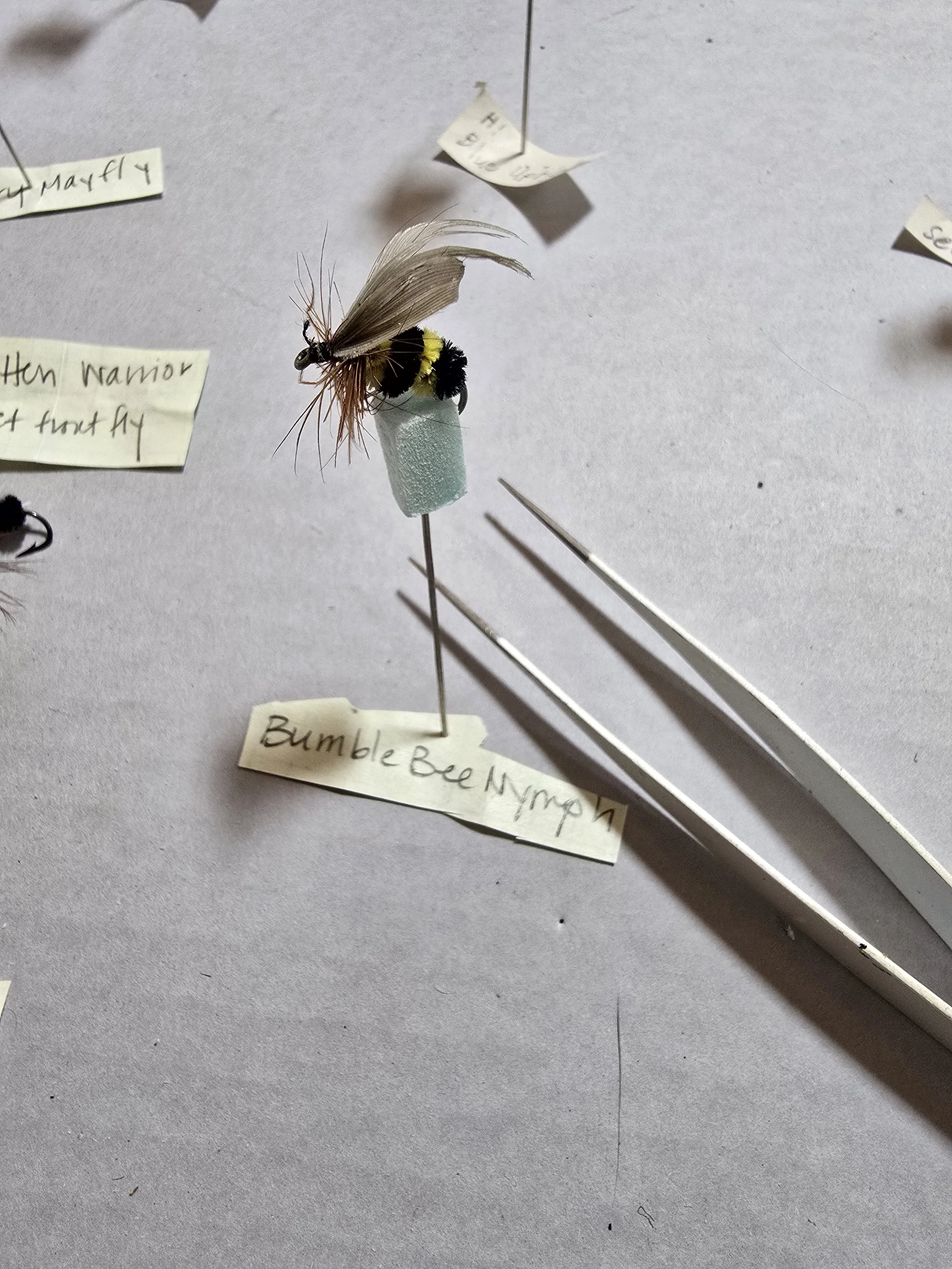
Bumble Bee Nymph
Fishing has a way of hooking our interest. Mention it, and suddenly people drift into stories about hot summer afternoons, the steady slap of water against a dock, the smell of sunscreen and bait shops, and that magical heartbeat-skipping moment when the rod tip twitches. Fishing isn’t always about catching fish. Sometimes it’s about slowing the current of life just long enough to notice what matters.
Before I knew it, the auctioneer’s hammer dropped, and I became the proud, if slightly confused, owner of a box of vintage fishing gear. At the time, I couldn’t have told you the difference between a lure and a plug or identified a casting rod from a fly rod if my tackle box depended on it. So, like any good angler chasing a mystery, I started digging. And what a catch it turned out to be.
The history of fishing lures is a deep story of ingenuity, artistry, science, and downright obsession. Humans have spent centuries trying to figure out how to get a fish to bite a lure. The answers are surprisingly beautiful. Hand-painted wooden plugs. Delicate fly patterns tied feather by feather. Gleaming spoons are engineered to flash like injured baitfish. Every lure tells a story about innovation, patience, and the eternal optimism of anglers convinced that this next cast will be the one.
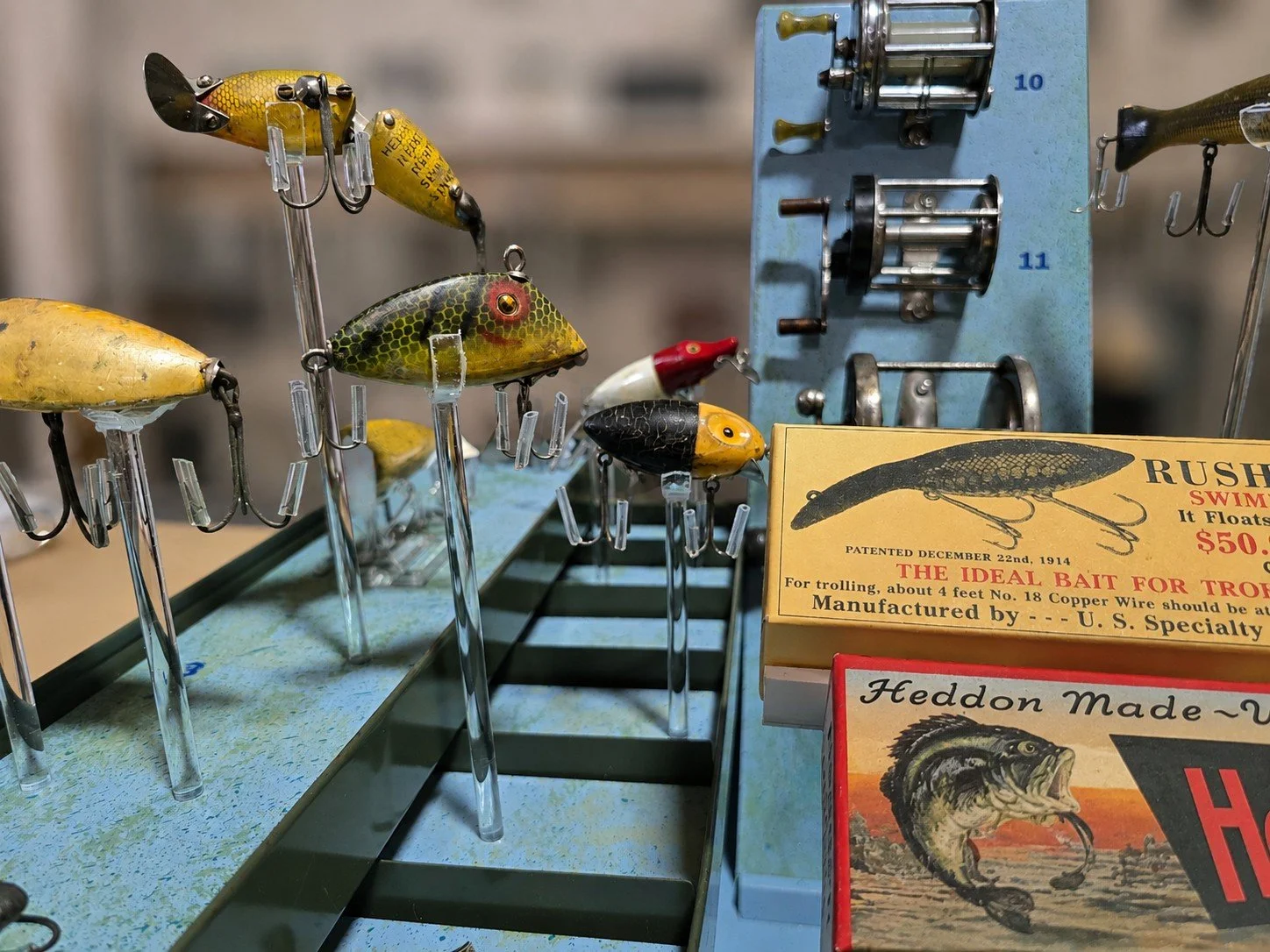
Pico Perch Lure
Soon the imagination started running like a hooked muskie. Design concepts flooded the desktops, graphics hit the drawing board, and engineering plans were tacked to the shop walls. For weeks, the shop has been buzzing as we put the finishing touches on our newest traveling exhibit: The Art of the Lure.
There were custom crates to build, countless tiny mounts to fabricate for delicate flies, and more than one unfortunate incident involving CA glue and my fingertips becoming permanently acquainted. We’ve measured, mounted, painted, polished, packed, and probably inhaled enough sawdust to build a small canoe. But every minute of it was worth it.
Now, after months of research, design, fabrication, and more than a few tangled lines along the way, we’re thrilled to announce that The Art of the Lure is officially on display at the wonderful Cleo Redd Fisher Museum in the charming town of Loudonville.
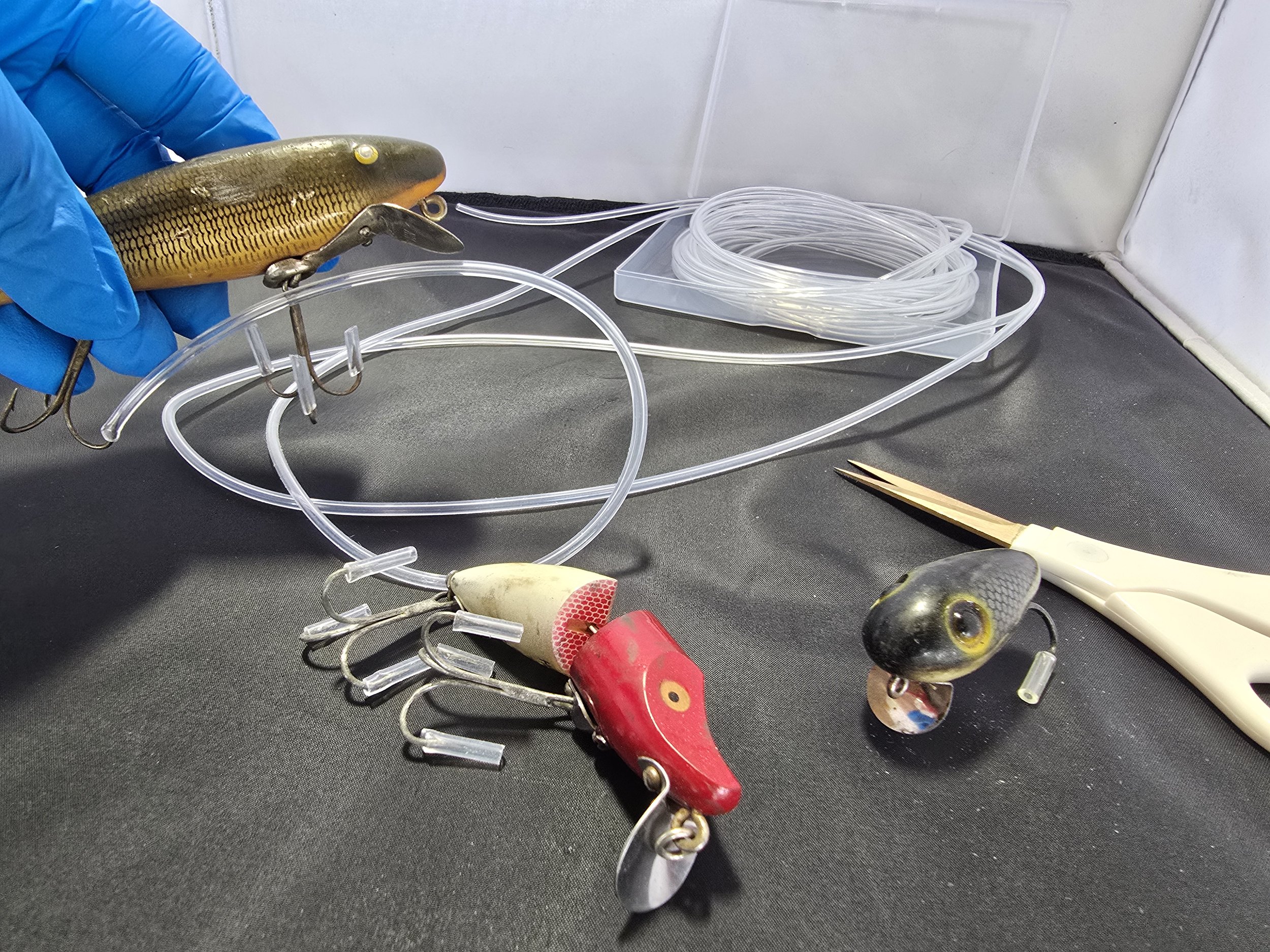
Anti-band aid Brigade is a must.
This summer, thousands of campers, anglers, hikers, and outdoor-loving families will travel to the beautiful Mohican State Park region of central Ohio. They’ll paddle rivers, hike trails, roast marshmallows, and hopefully, somewhere between the campground and the canoe launch, wander into the museum for a little unexpected inspiration.
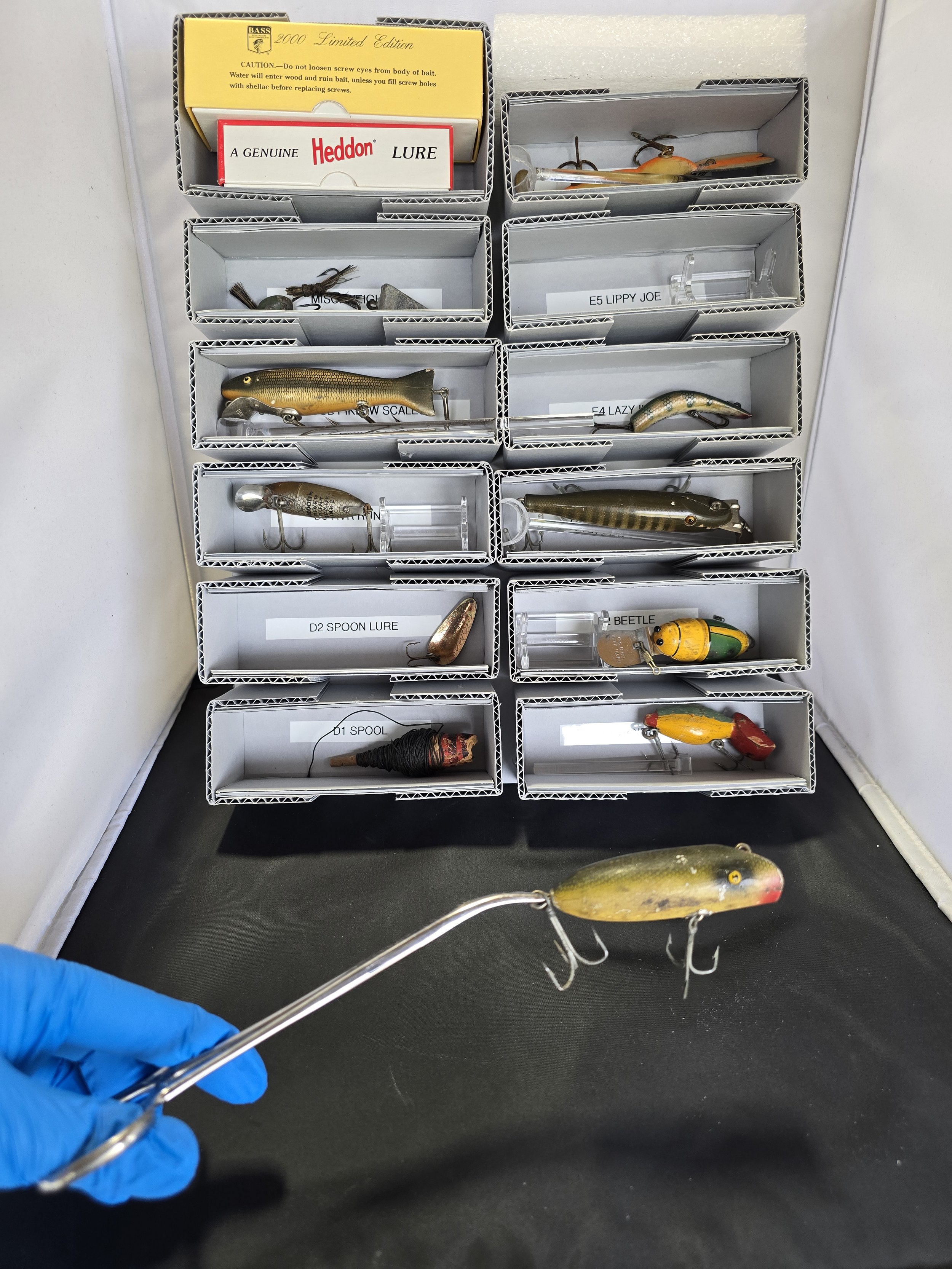
A nesting box for each lure.
Maybe they’ll point at an old lure and remember fishing with their grandfather. Maybe a child will discover fly fishing for the first time. Maybe someone will simply pause long enough to appreciate the artistry hidden inside an ordinary tackle box. That’s the real catch.